What is Hybrid Solar?
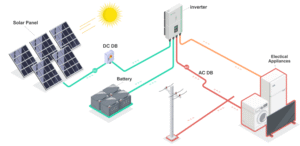
A Hybrid Solar System combines solar panels, a hybrid inverter, and a battery bank to provide a reliable and efficient power solution. This system offers both on-grid and off-grid capabilities, ensuring continuous power supply even during grid outages.
Key Benefits:
- Uninterrupted power supply during grid failures
- Energy independence
- Reduced electricity bills
- Low maintenance
- Environmental benefits
How it Works:
- Solar panels generate electricity from sunlight
- Excess energy is stored in the battery bank whenever it’s needed and remaining excess feedback to grid.
- Hybrid inverter manages energy flow between solar, battery, and grid
- System prioritizes solar power, using grid support when necessary
- Automatically switches to battery backup during grid outages
Advantages:
- Provides power during day and night
- Ideal for areas with frequent power outages
- Optimizes energy efficiency and savings
- Enhances grid stability and reliability
- Maintenance free LFP & ensures durability.
Disadvantages:
- Initial cost higher than Ongrid system.
Applications:
- Residential
- Very useful for commercial segments
- Industrial
- Rural or remote areas
What is On Grid Solar?
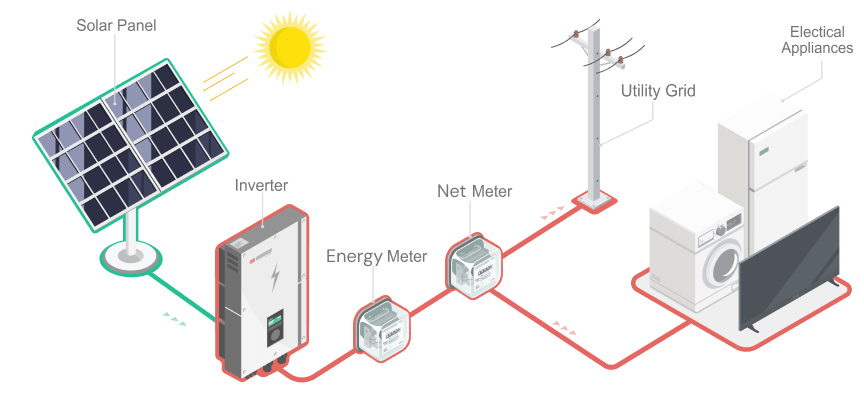
An on-grid solar system, also known as a grid-tied solar system, harnesses sunlight to generate electricity and feeds excess power back into the grid.
How it Works:
An on-grid solar system, also known as a grid-tied solar system, harnesses sunlight to generate electricity and feeds excess power back into the grid.
- Solar panels convert sunlight into DC electricity.
- An inverter converts DC electricity to AC electricity.
- AC electricity is sent to the grid.
- Excess power is fed back into the grid.
Main Components:
- Solar panels
- Inverters
- Power conditioning unit
- Grid connection equipment
Benefits:
- Lowers electricity expenses
- Reduces carbon footprint.
- High-return investment
- Suitable for areas with stable grid power
- Low cost comparatively Off-Grid & Hybrid System.
Ideal Applications:
- Educational institutions
- Industrial units
- Commercial establishments
- Residential areas with minimal power cuts
Drawback:
- System shutdown during grid outages (Anti-islanding safety feature)
Key Considerations:
- Grid stability and reliability
- Local net metering policies
- System sizing and design
What is Off-Grid Solar System?
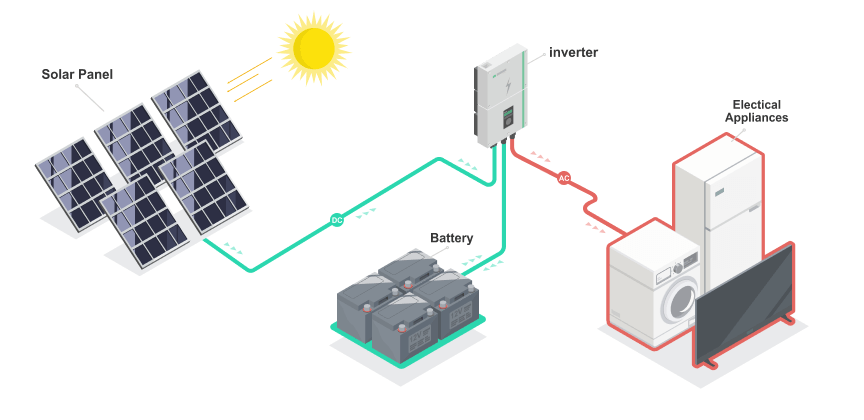
An off-grid solar system operates independently from the electrical grid, making it a self-sustaining power source. These systems are designed to generate and store enough energy to meet all of a household’s power needs without any reliance on off-site power sources.
Advantages:
- Completely independent from the grid
- A great solution for remote locations and underdeveloped communities.
- No voltage fluctuations.
- Reduce Electricity bills.
Disadvantages:
- They are more costly.
- Batteries are required to deliver electricity consistently throughout the day and night.
- Surplus energy production could go to waste.
- Batteries require maintenance, have a relatively short lifespan.
Off-Grid Solar System with Grid Support
Experience the best of both our Off-Grid Solar System, designed to operate independently from the electrical grid while providing a reliable backup option.
Key Features:
- Self-sustaining power source.
- Generates and stores energy to meet 100% of household power needs.
- Independent operation from the grid.
- Automatic grid support during adverse weather conditions (clouds, rain, etc.)
- Seamless integration with battery backup
Benefits:
- Energy independence
- Reduced electricity bills
- Reliable power supply
- Low maintenance compared to pure off-grid.
- Environmental benefits
System Components:
- Solar panels
- Battery bank
- Inverter/charger
- Grid tie inverter (optional)
- Monitoring and control system
How it Works:
- Solar panels generate electricity
- Excess energy is stored in the battery bank
- Inverter/charger converts DC power to AC
- Grid support kicks in during low solar production (cloudy/rainy days)
- System prioritizes solar power, using grid support only when necessary
This system provides peace of mind, knowing you have a reliable power source regardless of weather conditions.
Disadvantages:
- Costly higher than ongrid solar
- Battery maintenance. (Can minimise the maintenance with LFP batteries )

 Call Us
 Get a quote